

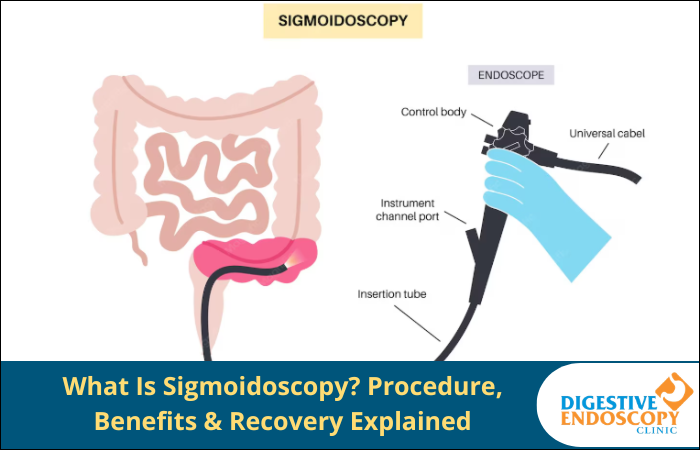
What Is Sigmoidoscopy? Procedure, Benefits & Recovery Explained
If you’ve been experiencing stomach discomfort, rectal bleeding, or changes in your bowel habits, your doctor may have recommended a sigmoidoscopy. The word alone can feel intimidating — but once you understand what it actually involves, most people find it far less scary than they imagined.
This blog walks you through everything you need to know about sigmoidoscopy — what it is, why doctors recommend it, what happens during the procedure, and how quickly you recover.
What Is a Sigmoidoscopy?
A sigmoidoscopy is a simple diagnostic test that allows your doctor to look inside your rectum and the lower part of your large intestine, called the sigmoid colon. A thin, flexible tube with a tiny camera — called a sigmoidoscope — is gently inserted through the rectum. The camera sends live images to a screen so your doctor can clearly see what’s going on inside.
There are two types:
- Flexible sigmoidoscopy — the most common type, uses a soft bendable tube
- Rigid sigmoidoscopy — rarely used today, mainly in specific clinical situations
Most patients undergo flexible sigmoidoscopy, which is quick, well-tolerated, and does not usually require sedation.
Why Do Doctors Recommend a Sigmoidoscopy?
Your doctor may suggest a sigmoidoscopy if you are experiencing:
- Blood in your stool or rectal bleeding
- Persistent diarrhea or constipation
- Stomach cramps or abdominal pain that won’t go away
- Mucus in the stool
- Unexplained weight loss
It is also used as a screening tool for colorectal cancer, particularly for people aged 45 and above. According to the World Health Organization, colorectal cancer is the third most common cancer globally — but when detected early, survival rates are significantly higher.
How to Prepare for a Sigmoidoscopy
Preparation is simpler than most people expect.
A day or two before:
- Eat light, low-fibre meals
- Avoid seeds, nuts, and raw vegetables
- Drink plenty of water and clear fluids
On the day:
- You will be given an enema to clear the lower bowel a couple of hours before the procedure
- Inform your doctor about any medications you take, especially blood thinners
- Wear comfortable clothing
That’s it. No multi-day fasting, no large volumes of laxatives — just simple steps that take very little time.
What Happens During a Sigmoidoscopy?
The sigmoidoscopy procedure usually takes between 15 to 20 minutes. Here is what happens:
1. You lie on your left side with knees bent. This position makes the procedure easier and more comfortable.
2. The sigmoidoscope is gently inserted into the rectum. You may feel mild pressure — this is normal and passes quickly.
3. A small amount of air is pumped in to open up the colon walls for a clearer view. This can cause a bloated feeling or light cramps, but it settles soon after.
4. Your doctor examines the lining of the lower colon, looking for polyps, inflammation, bleeding sources, or any unusual tissue.
5. If needed, a tissue sample (biopsy) is taken or a small polyp is removed during the same procedure — no second visit required.
6. The scope is gently removed and you rest for a short while before heading home.
Most patients feel comfortable enough to leave within 30 minutes of the procedure ending.
Is a Sigmoidoscopy Painful?
This is the question almost everyone asks. Honestly — most people feel mild discomfort, not pain. The sensation is similar to gas cramps. Some people feel nothing at all.
The procedure typically does not need general anaesthesia. If you are feeling anxious, speak to your doctor beforehand about a mild sedative. Taking slow, deep breaths during the procedure also helps a great deal.
Benefits of a Sigmoidoscopy
- Finds problems early — polyps and early signs of cancer can be spotted before symptoms worsen
- Quick procedure — done in under 30 minutes
- Results right away — your doctor tells you what they found immediately after
- Treats as it diagnoses — polyps can be removed in the same session
- Easy preparation — far simpler than a colonoscopy
- Very safe — serious complications are rare, especially with a trained gastroenterologist
Recovery After a Sigmoidoscopy
Recovery is fast for most people.
- You may feel bloated or gassy for a couple of hours — this clears up on its own
- If a biopsy was taken, light spotting of blood in the stool for a day or two is normal
- Most people return to work and daily activities the same day or the next day
- Eat light meals after the procedure and stay well-hydrated
Call your doctor immediately if you notice:
- Heavy rectal bleeding
- Severe abdominal pain
- Fever above 38°C
These are rare, but it’s always good to know the signs.
FAQ:
Q1. How is a sigmoidoscopy different from a colonoscopy?
A sigmoidoscopy looks at the lower part of the colon only. A colonoscopy examines the entire colon. Sigmoidoscopy is quicker, needs less preparation, and usually does not require sedation.
Q2. How long does the whole visit take?
Around 1.5 to 2 hours including preparation, the procedure, and a short rest period afterward.
Q3. Can polyps be removed during the procedure?
Yes. Small polyps found during a sigmoidoscopy can often be removed right then, without needing a separate appointment.
Q4. At what age should I consider a sigmoidoscopy?
Most guidelines suggest starting colorectal screening at age 45. If you have a family history of colon disease, your doctor may recommend starting earlier.
Take the First Step Toward Better Gut Health
If you have been putting off getting checked, now is the time to stop waiting. A sigmoidoscopy is a short, simple procedure that can give you real answers — and real peace of mind.
Digestive Endoscopy Clinic in Pune, founded by Dr. Suresh Jain, offers trusted gastroenterology care for patients across Pune. Dr. Jain and his team take the time to understand your symptoms, explain your options clearly, and make sure you feel comfortable every step of the way.
📞 Book your consultation today and take charge of your digestive health.
🌐 Visit: digestiveendoscopyclinic.com